Category: artificial intelligence

  • Apps That Generate Images: Best AI Image Generators to Try

    Apps That Generate Images: Best AI Image Generators to Try

    Artificial intelligence has transformed the way we create visual content. You no longer need advanced Photoshop skills, expensive design software, or hours of manual work to create a professional-looking image.

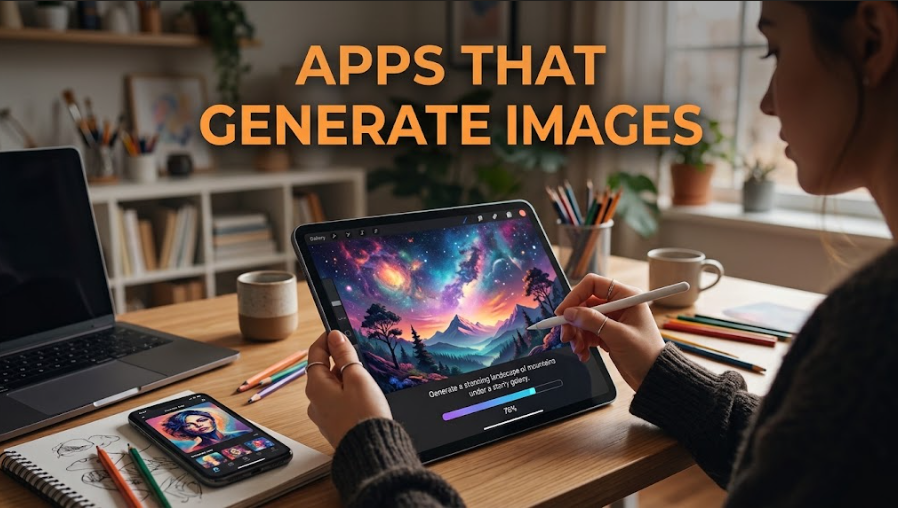
    Today, apps that generate images can turn a simple text prompt into photographs, illustrations, product concepts, posters, social media graphics, marketing visuals, logos, artwork and much more.

    Some of these apps are designed primarily for generating images, while others combine image generation with editing, graphic design, photo manipulation and other creative tools.

    Whether you are a blogger, social media marketer, business owner, graphic designer, content creator or simply someone who wants to experiment with AI-generated visuals, there are now several excellent apps that generate images worth trying.

    In this guide, we look at some of the best options available at the moment, what makes each one different, and which app may be best for your particular needs.

    What Makes the Best Apps That Generate Images?

    With so many AI image generators available, choosing one can be confusing. The best app depends on what you want to create and how much control you need.

    Here are some important things to consider when comparing apps that generate images:

    • Image quality: How realistic, detailed and visually appealing are the generated images?
    • Prompt understanding: How accurately does the app understand detailed instructions?
    • Text rendering: Can it generate readable text inside posters, advertisements, thumbnails and other designs?
    • Image editing: Can you upload an existing image and make changes using natural-language instructions?
    • Character consistency: Can the app maintain the appearance of a person or character across multiple images?
    • Reference images: Can you provide images to guide the style, composition or subject?
    • Aspect ratios: Can you create square, portrait, landscape and other formats for different platforms?
    • Ease of use: Is the app suitable for beginners or does it require technical knowledge?
    • Commercial use: What does the platform’s license allow you to do with generated images?
    apps that generate images

    1. ChatGPT Images

    If you want one of the easiest apps that generate images, ChatGPT is now one of the strongest general-purpose choices.

    OpenAI’s current image experience is ChatGPT Images 2.0, rather than the older DALL·E 3 experience. It can create images from text prompts and edit existing images using conversational instructions. It is available on the web, iOS and Android, and OpenAI says ChatGPT Images 2.0 is available across all ChatGPT tiers.

    You can simply describe what you want and then continue chatting with the AI to refine the result.

    For example, you could ask it to:

    Create a professional product advertisement for a Nigerian fintech company, using a clean blue-and-white design, with the headline “Send Money Faster.”

    You can then ask it to change the headline, modify the background, adjust the composition or create another version.

    Best for: Bloggers, marketers, entrepreneurs, content creators and general-purpose image creation.

    Key strengths:

    • Conversational image generation
    • Strong instruction following
    • Image editing
    • Good text rendering
    • Works with uploaded reference images
    • Easy for beginners

    Platforms: Web, iOS and Android.

    Important: If you see older articles recommending DALL·E 3 as the main ChatGPT image generator, those articles are outdated. OpenAI has moved its main ChatGPT image experience to newer image-generation technology.

    2. Midjourney

    Midjourney remains one of the most recognizable names among apps that generate images, particularly for people who care about visual quality, artistic style and cinematic-looking results.

    Midjourney is no longer simply a Discord-based image generator. Its web platform now provides a dedicated creation interface, image organization, personalization, moodboards and an advanced Editor for modifying generated or uploaded images.

    Its Editor supports tools such as inpainting, image expansion, resizing, layers and retexturing, giving creators considerably more control over the final result.

    Best for: Artists, creative professionals, concept artists, marketers and creators who want highly stylized visuals.

    Key strengths:

    • Strong artistic quality
    • Cinematic imagery
    • Style and personalization controls
    • Image references
    • Advanced web-based editing
    • Excellent creative exploration

    Platforms: Web and Discord.

    3. Google Gemini

    Google Gemini deserves a place among the leading apps that generate images because Google’s image-generation technology has advanced significantly.

    Google’s current image-generation lineup includes Nano Banana 2, which is based on Gemini 3.1 Flash Image. It is designed for fast image generation and editing while maintaining strong prompt adherence, subject consistency and text rendering.

    Gemini can generate new images and edit existing ones through natural-language instructions.

    It can be particularly useful when you want to create an image and then keep refining it through a conversation.

    Best for: Everyday users, marketers, bloggers, educators and creators who want conversational image generation and editing.

    Key strengths:

    • Fast image generation
    • Strong instruction following
    • Image editing
    • Good text rendering
    • Character and subject consistency
    • Integration with Google’s AI ecosystem

    Platforms: Web, Android, iOS and Google products that support Gemini image generation.

    4. Adobe Firefly

    Adobe Firefly is another major option among apps that generate images, particularly for professional designers and businesses already using Adobe’s creative ecosystem.

    Firefly can generate images from text and provides tools for editing and transforming visual content. It integrates with Adobe’s broader creative products and workflows.

    Adobe also emphasizes the commercial-safety positioning of its own Firefly models, which are trained using content Adobe says it has permission to use, including Adobe Stock, public-domain and licensed material.

    Adobe’s newer Firefly Image Model 5 also focuses on photorealistic detail, native 4MP generation and prompt-based editing.

    Best for: Graphic designers, marketers, businesses and professional creative teams.

    Key strengths:

    • Text-to-image generation
    • Generative editing
    • Photoshop integration
    • Creative Cloud integration
    • Professional editing workflow
    • Commercially focused Firefly models

    Platforms: Web and Adobe Creative Cloud applications.

    5. Ideogram

    If you need an AI image generator that is particularly good at putting readable text inside images, Ideogram should be on your list.

    This makes it particularly useful for creating posters, book covers, advertisements, logos, social media graphics, signs and other designs where typography is important.

    Ideogram’s current generation tools also support image references, editing, Remix, Canvas and other creative controls.

    Its text-rendering capability is one of its major selling points. Ideogram says its current system achieves high accuracy when rendering text inside generated images.

    Best for: Posters, logos, advertisements, thumbnails, social media graphics and designs containing text.

    Key strengths:

    • Excellent text rendering
    • Strong typography
    • Logos and poster creation
    • Style references
    • Image editing
    • Canvas workflow

    Platforms: Web and iOS, with API access also available.

    6. Leonardo AI

    Leonardo AI has evolved from an AI art-generation platform into a broader creative image-generation and editing environment.

    Its Phoenix model focuses on prompt adherence, visual fidelity and coherent text within images. Leonardo also provides image guidance features, including style, content and character references.

    This makes Leonardo useful when you want more control over the relationship between your prompt, reference images and final output.

    Best for: Creators, marketers, game artists, concept artists and people who want more control over AI-generated visuals.

    Key strengths:

    • Strong prompt adherence
    • Image generation and editing
    • Style references
    • Character references
    • Content references
    • Text rendering

    Platforms: Web and API.

    7. Canva

    Canva is one of the most practical apps that generate images for people who don’t want to use a separate AI image generator and then move the image into another design application.

    With Canva’s AI tools, you can generate an image and immediately use it in a social media post, presentation, flyer, thumbnail, advertisement or other design.

    Canva’s Magic Media can generate images from text prompts, while Canva’s broader design environment lets you combine generated visuals with templates, text, graphics, animations and other elements.

    Best for: Bloggers, small businesses, social media managers, marketers and non-designers.

    Key strengths:

    • Image generation inside a design editor
    • Templates
    • Social media designs
    • Presentations
    • Brand kits
    • Easy editing and resizing

    Platforms: Web, iOS and Android.

    8. Photoleap

    Photoleap remains useful if your priority is creating and editing AI-generated images directly from a smartphone.

    Rather than focusing only on text-to-image generation, it combines AI tools with conventional photo-editing capabilities.

    You can use it for creative transformations, image manipulation, effects and other mobile-first visual projects.

    Best for: Mobile content creators and people who prefer editing images on their phones.

    Key strengths:

    • Mobile-first workflow
    • AI image creation
    • Photo editing
    • Creative effects
    • Image transformations

    Platforms: iOS and Android.

    Which Apps That Generate Images Should You Choose?

    There isn’t one perfect app for everyone. Your best choice depends on what you want to accomplish.

    Best Apps That Generate Images for General Use

    ChatGPT Images is an excellent choice if you want to describe an image conversationally, generate it and continue refining it through natural-language instructions.

    Best Apps That Generate Images for Artistic Visuals

    Midjourney remains a strong choice if your priority is artistic quality, creative styles and visually striking compositions. Its web-based Editor also gives creators more control than earlier versions of the platform.

    Best Apps That Generate Images for Text in Images

    Ideogram is particularly worth considering for posters, advertisements, logos, thumbnails and other designs where accurate text matters.

    Best Apps That Generate Images for Google Users

    Gemini is an excellent option if you already use Google’s AI ecosystem and want fast generation and editing through conversational prompts. Nano Banana 2 is Google’s current fast image-generation model across Gemini and other Google products.

    Best Apps That Generate Images for Professional Design

    Adobe Firefly is a strong choice for designers and businesses that want AI generation and editing integrated with Adobe’s professional creative tools.

    Best Apps That Generate Images for Social Media Design

    Canva is difficult to beat for convenience because you can generate an image and immediately turn it into a complete social media graphic, presentation, flyer or marketing design.

    Best Apps That Generate Images for Creative Control

    Leonardo AI is worth considering when you want image references, style control, character consistency and more advanced generation options.

    Tips for Getting Better Results from Apps That Generate Images

    The quality of your prompt can significantly affect the result. However, modern image generators are becoming much better at understanding ordinary conversational instructions, so you don’t necessarily need to write complicated prompts.

    Here are some practical tips:

    1. Describe the Subject Clearly

    Instead of:

    A man using a laptop.

    Try:

    A young Nigerian entrepreneur working on a laptop in a modern home office, natural window light, professional lifestyle photography.

    2. Describe the Composition

    Tell the AI how you want the image arranged.

    For example:

    Place the entrepreneur on the right side of the frame and leave empty space on the left for advertising text.

    This can be particularly useful when creating images for blog featured images, Facebook ads or website banners.

    3. Specify the Visual Style

    You can describe the desired look:

    • Photorealistic
    • Editorial photography
    • Cinematic
    • Watercolor
    • 3D illustration
    • Minimalist
    • Cartoon
    • Product photography
    • Magazine cover

    4. Specify the Aspect Ratio

    Think about where the image will be used.

    For example:

    • 1:1 for square social media graphics
    • 4:5 for portrait social posts
    • 16:9 for blog banners and YouTube thumbnails
    • 9:16 for Stories, Reels and TikTok-style content

    Many modern image-generation apps allow you to select or specify aspect ratios.

    5. Use Reference Images When Available

    If you need a particular person, product, style or composition, uploading a reference image can often produce better results than trying to describe everything with words.

    Tools such as Midjourney, Gemini, Ideogram and Leonardo AI provide different forms of image-reference or consistency features.

    6. Edit Instead of Starting Over

    Don’t assume you have to generate a completely new image every time something is wrong.

    Modern AI image apps increasingly allow you to tell the system what to change.

    For example:

    Keep everything the same but change the shirt from blue to white.

    Or:

    Remove the person in the background and replace the background with a modern office.

    This type of conversational editing is now one of the biggest advantages of newer image-generation systems.

    Are Images Generated by AI Free to Use Commercially?

    This is an important question for businesses.

    The fact that an image was generated by an AI app does not automatically mean that you can use it however you want.

    Commercial-use rights depend on the platform’s terms, your subscription, the model used and sometimes the source material or references you provide.

    For example, Adobe specifically positions its own Firefly models around commercially safe training data, but that does not mean every third-party model available through an Adobe product automatically has identical terms.

    Before using an AI-generated image for a logo, product packaging, paid advertising, merchandise or other commercial purposes, check the current licensing terms of the particular platform.

    You should also avoid uploading images you do not have permission to use as references.

    Final Thoughts on Apps That Generate Images

    The world of apps that generate images has changed dramatically. What used to require specialist design skills can now be accomplished by simply describing what you want.

    As at the time of publishing this post, you have several strong options.

    ChatGPT Images is excellent for conversational generation and editing. Midjourney remains a powerful choice for artistic and cinematic imagery. Gemini brings Google’s latest Nano Banana image technology into a conversational AI assistant. Ideogram stands out when accurate text inside images matters. Adobe Firefly is particularly attractive to professional designers, while Canva makes AI-generated images immediately useful in everyday marketing and design workflows. Leonardo AI provides another strong option for creators who want more control and reference-based generation.

    The best approach is not necessarily to choose just one.

    Try several apps that generate images, create the same prompt in each, and compare the results. You may find that one tool is better for blog images, another for advertisements, another for realistic photos, and another for graphics containing text.

    The important thing is to choose the tool that fits the type of visual content you create—not simply the one that is most popular.
  • ChatGPT Prompts Examples For Faceless Youtube Automation

    ChatGPT Prompts Examples For Faceless Youtube Automation

    Faceless YouTube automation has rapidly become one of the most popular side hustles and digital business models. By producing high-quality content without ever showing your face on camera, you can build scalable channels in profitable niches like personal finance, true crime, tech reviews, luxury, or mystery. However, running a successful channel manually requires immense time: researching content ideas, outlining scripts, writing compelling dialogue, and optimizing metadata for search algorithms.

    That is where generative AI comes in. By using tailored ChatGPT prompts for faceless YouTube automation, you can streamline your entire workflow. From niche selection and story scripting to generating prompts for AI voiceovers and thumbnail art, ChatGPT acts as your all-in-one assistant producer. Below, you will find a complete guide packed with ready-to-use prompt templates designed to elevate your faceless YouTube production pipeline.

    Why Use ChatGPT for Faceless YouTube Channels?

    Automating a YouTube channel requires speed, consistency, and viewer retention. ChatGPT helps faceless creators overcome creative block and slash production times from hours to minutes. Here are the core advantages:

    • Rapid Content Production: Draft full-length video scripts, Shorts ideas, and outlines in seconds.
    • Data-Driven SEO Optimization: Craft titles, descriptions, and tag lists designed to rank in YouTube search and recommendation engines.
    • Structured Visual Instructions: Generate script cues specifically tailored for stock video selection or AI image generators like Midjourney and Leonardo AI.
    • Consistent Channel Branding: Maintain a unified tone across all scripts, whether your channel style is dramatic, humorous, or strictly educational.

    Prompts for Channel Strategy and Niche Selection

    Before launching a faceless channel, you need to identify lucrative niches with high CPM (Cost Per Mille) and strong audience demand. Use these prompts to brainstorm and evaluate channel ideas.

    1. High-CPM Niche Ideation

    Prompt: “Act as a YouTube growth expert. List 10 high-CPM niches suitable for a faceless YouTube automation channel. For each niche, provide the target audience demographic, average CPM range, and 3 specific sub-topics that currently perform well on the platform.”

    2. Content Bucket Planning

    Prompt: “I am starting a faceless YouTube channel focused on [Insert Niche, e.g., Dark History/Tech Trends]. Generate 5 broad content pillars or series themes. Under each theme, list 5 specific video title ideas that utilize curiosity gaps and high search volume keywords.”

    Prompts for Writing Viral Video Scripts

    Retention is the single most critical metric on YouTube. Your script must hook viewers in the first 5 seconds, build tension or deliver value in the middle, and drive engagement at the end. Use these prompts to build high-retention video scripts.

    1. The 5-Second Viral Hook Generator

    Prompt: “Act as an expert YouTube scriptwriter. I am making a faceless video about [Insert Topic]. Write 5 different intro hooks (under 30 words each) designed to maximize viewer retention within the first 5 seconds. Use techniques like open loops, shocking statistics, bold claims, or relatable pain points.”

    2. Full-Length Video Script with Visual Cues

    Prompt: “Write a detailed 1,500-word video script for a faceless YouTube channel about [Insert Topic]. Format the script into two columns or clear blocks: one for ‘Audio Narrator Voiceover’ and one for ‘Visual Cues’ (specifying stock footage, background music mood, sound effects, and text overlays). The tone should be [dramatic/informative/energetic], and the script must include an intro hook, main body points with smooth transitions, and a call-to-action outro.”

    3. YouTube Shorts and Reels Scripts

    Prompt: “Create a fast-paced 60-second YouTube Shorts script about [Insert Topic]. Break it down second-by-second (0-5s Hook, 6-45s Value delivery, 46-60s Payoff & CTA). Keep sentence structures short and conversational for an energetic AI voiceover delivery.”

    Prompts for YouTube SEO, Titles, and Metadata

    Even the best video will fail to generate views if nobody clicks on it. ChatGPT can generate high-CTR (Click-Through Rate) titles and search-engine-optimized descriptions to ensure your videos get pushed by the algorithm.

    1. Click-Worthy Title Generator

    Prompt: “Give me 15 viral YouTube video title options for a video about [Insert Topic]. Group them into three styles: 1) Curiosity-Driven, 2) Listicle/Data-Focused, and 3) Negative Framing (e.g., ‘Don’t Do This…’). Ensure every title is under 60 characters to avoid getting cut off on mobile devices.”

    2. SEO-Optimized Description Box

    Prompt: “Write a YouTube video description optimized for search algorithms for a video titled ‘[Insert Title]’. Include a compelling 2-sentence summary with primary keywords in the first two lines, a section for key takeaways with bullet points, strategic timestamp placeholders, relevant hashtags, and a disclaimer statement.”

    3. Tag and Metadata Generator

    Prompt: “Generate a comma-separated list of 25 YouTube tags for a video about [Insert Topic]. Mix broad search terms, long-tail target phrases, and highly specific topical keywords to help the algorithm contextualize the video.”

    Prompts for Visual Assets and Voiceover Direction

    Faceless channels rely heavily on voiceover synthesis (like ElevenLabs) and visual generators (like Midjourney or Pika). ChatGPT can act as the link between your script and these tools.

    1. Midjourney / AI Image Prompt Generator

    Prompt: “I am producing a video on [Insert Topic]. Read the following paragraph from my script: ‘[Paste Paragraph]’. Generate 5 detailed AI image prompts for Midjourney to illustrate this scene. Make sure to specify artistic style, lighting, aspect ratio (–ar 16:9), color palette, and hyper-realistic camera angles suitable for cinematic YouTube visuals.”

    2. Voiceover Pacing and Tone Prompts

    Prompt: “Review this script segment: ‘[Paste Script Segment]’. Rewrite it with voiceover performance notes in brackets, such as [Pause for effect], [Whisper softly], [Increase tempo], or [Emphasize word], so I can prompt my AI voice generator or voice actor for maximum emotional impact.”

    Best Practices for Using ChatGPT in Faceless Automation

    While ChatGPT handles massive workloads, following these best practices will prevent your channel from feeling generic or spammy:

    • Fact-Check Everything: AI language models can hallucinate facts, dates, and statistics. Always verify numbers and historical references before publishing.
    • Inject Human Editing: Polish script outputs to sound natural when spoken aloud. Remove overused AI phrases like “In conclusion,” “Unraveling the mystery,” or “Delve deep into.”
    • Combine AI Tools: Pair ChatGPT with dedicated text-to-speech tools (ElevenLabs), stock video platforms (Storyblocks, Pexels), and thumbnail generators (Canva, Photoshop) for a complete automated assembly line.
    • Maintain Originality: Use ChatGPT for structure and framing, but add unique perspectives, storytelling angles, or niche data to make your content distinct from competitors.

    Conclusion

    Leveraging ChatGPT prompts for faceless YouTube automation transforms the channel creation process from a grueling grind into a streamlined digital business. By giving ChatGPT precise roles, contextual constraints, and clear structural guidelines, you can consistently publish high-retention video scripts, clickable titles, and SEO-rich metadata. Experiment with the prompt templates provided above, refine them to fit your channel’s unique tone, and build an automated content factory that attracts viewers around the clock.

  • Generate Featured Image With AI for WordPress Blog Posts

    Generate Featured Image With AI for WordPress Blog Posts

    As a blogger, creating engaging and relevant featured images for your blog posts can be a daunting task. Sometimes, the concept you want to illustrate doesn’t exist or is too hard to design. But what if I told you that there’s a solution to this problem?

    Well, with the advent of Artificial Intelligence (AI), you can now generate featured image with AI for your WordPress blog posts. In this article, we’ll explore how to do just that to make your blog posts more visually engaging.

    The Challenge of Finding the Perfect Featured Image for Blog Posts

    We’ve all been there – searching for hours on stock photo websites, trying to find the perfect image to represent our blog post. But sometimes, it just doesn’t exist. Or, even if it does, it’s too generic or doesn’t quite convey the message we want to send. This is where AI-generated images for blog posts features images come in.

    What Are AI-Generated Featured Images?

    AI-generated images are exactly what they sound like: images created by artificial intelligence based on specified parameters or seed information.

    In the context of WordPress, a new feature added to the Jetpack AI Assistant, can generate unique and relevant featured images for blog posts or WordPress pages.

    This is particularly useful for bloggers and site owners who may not have the resources or skills to produce consistently high-quality visuals.

    AI-generated featured images are created using machine learning algorithms that can generate unique and relevant images tailored to your blog post’s content and tone.

    For example, you could write a blog post about the calmness of beachside vacations, and the AI could generate a tranquil image of the sea at sunset, perfectly enhancing the theme of your article without the need for manual image search or graphic design efforts.

    Benefits in WordPress

    1. Consistency: AI ensures that every post has a visually appealing image, matching the tone and content.
    2. Efficiency: Automates the process of finding or creating a featured image, saving time.
    3. Customization: AI algorithms can be trained or directed to produce images in specific styles or palettes, aligning with brand identity.
    4. Scalability: Can handle a large volume of posts without additional human input.

    How To Generate Featured Image With AI In WordPress

    It’s super quick to start generating featured images with AI for your WordPress blog posts.

    STEP 1

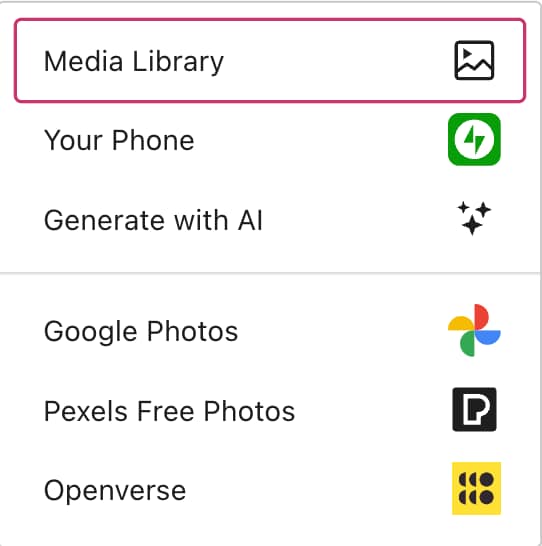
    Click the “Set featured image” under the Post options

    set featured image in wordpress

    STEP 2

    Choose Generate with AI from the options

    generate image with ai for wordpress featured image for blog post

    It will then generate an image for you,

    and you can include optional instructions and generate a new image. i.e you can refine the generated featured image, by including optional instructions such as “change the color palette to blue and orange” or “cartoon style, more birds, show green trees”

    There is also an option for you to navigate through generated featured images.

    Video Tutorial On How To Generate Images For WordPress Blog Posts Featured Image

    You can check out the video tutorial below on how to generated featured image with AI :

    How Much To Generate Featured Image with AI in WordPress?

    Featured image generation with AI costs 10 requests per image i.e 10 requests will be deducted from your available balance of WordPress AI Assistant requests.

    Hence, if you do not have enough request to generate a featured image with AI, you won’t be able to make use of the feature and you will be prompted to upgrade.

    It costs approximately $100 per year for 100 requests if you decide to upgrade.

    And you can save 20% by paying for two years i.e instead of paying US$200.00 for 2 years plan, you will get a multi-year discount of -US$40.00 and pay a total of US$160 instead.

    Best Practices for Utilizing AI To Generated Featured Images in WordPress

    • Set Clear Parameters: Clearly define what type of images you want the AI to generate.
    • Review Automatically Generated Images: Always check AI-generated images to ensure they align with post content.

    Conclusion

    Generating featured images with AI for your WordPress blog posts is a game-changer. With the ability to create unique and relevant images, you can take your blog to the next level and help you maintain a competitive edge in the digital content landscape. So why not give it a try and see what amazing images you can create?

  • Meta AI Chatbot : Free Conversational AI Built With Llama 3

    Meta AI Chatbot : Free Conversational AI Built With Llama 3

    In the rapidly evolving world of artificial intelligence, the social media giant Meta has unveiled its latest innovation: the Meta AI Chatbot. This AI-powered wonder promises to revolutionize the way we interact online, blurring the lines between human connection and digital assistance.

    For anyone who has used OpenAI’s ChatGPT, or other chatbots like Google’s Gemini ai, Anthropic’s Claude ai, Meta’s AI will immediately feel familiar but with billions of daily users across its messaging apps, Meta AI seems to have a key competitive edge against ChatGPT and others. The Meta AI chatbot is right there inside of your chat context. Hence, you don’t have to pull yourself out of context to interact or engage or get more things done.

    Imagine a world where you never have to worry about running out of things to say, where brainstorming sessions happen at the speed of light, and where crafting the perfect caption becomes as effortless as breathing. That’s the promise of the Meta AI Chatbot, and it’s got everyone buzzing.

    What is Meta AI Chatbot

    Built on Meta Llama 3, Meta AI is an intelligent assistant, developed by Meta Platforms Inc. (formerly known as Facebook, Inc.) that is capable of complex reasoning, following instructions, visualizing ideas, and solving nuanced problems.

    Meta AI chatbot assists and converse with users in a helpful and engaging way. You can interact with it like a person, to get things done, learn, create and connect with the things that matter to you.

    Meta sees it as a free virtual assistant which can be used to do everything from research, planning a trip with your group chat, writing a photo caption, answering questions you’d normally ask a search engine and more.

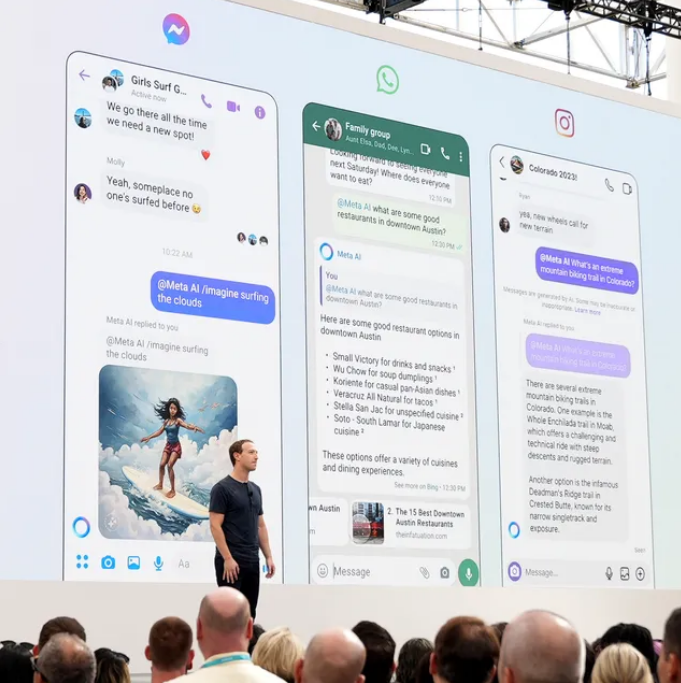
    In addition to answering questions, Meta AI can create AI-generated images like Midjourney or OpenAI’s DALL-E. Using the prompt “imagine,” users can ask Meta to produce any image that comes to mind.

    meta ai chatbot assistant

    Meta AI Capabilities

    The Meta AI Chatbot boasts an impressive array of features and capabilities which include:

    • Answering questions on various topics, from science and history to entertainment and culture.
    • Generating text, such as articles, emails, or even creative writing.
    • Offering suggestions and ideas for creative projects or brainstorming sessions.
    • Providing definitions and explanations for complex terms and concepts.
    • Conversing on various topics, using natural language understanding and generation capabilities.

    Benefits of Meta AI Chatbot

    Here are 9 benefits of Meta AI chatbot:

    • 24/7 Availability: It’s always ready to assist, anytime, anywhere.
    • Quick Answers: Get instant responses to your questions, saving you time and effort.
    • Personalized Experience: It adapts to your preferences and communication style.
    • Multi-Tasking: Handle multiple conversations and tasks simultaneously.
    • Consistency: Provides accurate and consistent information, reducing human error.
    • Scalability: Support a large volume of conversations, making it ideal for businesses.
    • Cost-Effective: Reduce customer support costs and improve efficiency.
    • Language Understanding: Comprehend natural language, making interactions feel natural.
    • Continuous Learning: Improve knowledge and abilities through machine learning and user interactions.

    These benefits make meta ai chatbot an excellent tool for various tasks, from customer support to creative writing and research assistance!

    Meta AI Chatbot Applications and Use Cases

    The Meta AI Chatbot has far-reaching potential across various industries and applications, including:

    • Customer Service and Support: The chatbot can provide 24/7 customer support, answering frequently asked questions, and helping with basic inquiries.
    • Virtual Assistants and Automation: The chatbot can be integrated into virtual assistants, such as Alexa or Google Home, to enhance their conversational capabilities.
    • Language Learning and Education: The chatbot can engage in language learning conversations, helping students practice their language skills and receive feedback.
    • Healthcare and Medical Applications: The chatbot can assist with patient inquiries, provide basic medical information, and help with appointment scheduling.
    • Marketing and Sales: The chatbot can engage with customers, answer product questions, and help with lead generation.

    How Meta AI Chatbot Works?

    With Meta AI at your fingertips, you can research topics, explore interests, get how-to advice, and learn new hobbies. Leading search providers have been integrated so you can get up-to-date information from the web. Now, you can also ask Meta AI anything with search across Facebook, Instagram, WhatsApp and Messenger.

    You can bring @MetaAI into your group chats in Messenger, Instagram, and WhatsApp to share recommendations for how to organize a group project or inspire ideas for dinner party recipes or a trip itinerary.

    You can use Meta AI directly in your Facebook Feed to explore more on topics you and your loved ones engage with. When Meta AI is activated, you can get help connecting more deeply with content that matters.

    How To Access Meta AI Chatbot

    Users of Facebook, Instagram, WhatsApp and Messenger will be able to access Meta’s next-level generative AI assistant direct in the search bar of each app, across multiple countries.

    As you can see in this example, posted by Instagram chief Adam Mosseri, now, when you go to search in any of Meta’s main apps (i.e. not Threads as yet), you’ll have access to Meta’s generative AI chat engine, where you’ll be able to pose conversational queries, directly in the app.

    Meta AI is already available on the Ray-Ban smart glasses, and the company said that soon it will be available on the Meta Quest headset, too.

    Additionally, the company has unveiled meta ai chatbot website for users to access the chatbot when trying to get things done on their computer.

    Meta AI Chatbot Login Link

    The meta ai site can be accessed via https://www.meta.ai

    You will be required to login with Facebook to save your conversations with Meta AI for future reference.

    Download Meta AI Chatbot?

    For now, there is no meta ai chatbot app to download.

    All you need to do is to update you existing Facebook app, Instagram app, Whatsapp app and Messenger app to have access to the meta ai chatbot feature in those apps.

    Meta AI Chatbot Challenges and Limitations

    While the Meta AI Chatbot is a remarkable achievement, it’s important to acknowledge its challenges and limitations:

    • Data Quality and Bias: The chatbot’s performance is dependent on the quality and diversity of its training data, which can be biased or incomplete.
    • Ethical Considerations and Privacy: The chatbot’s ability to collect and process user data raises ethical concerns and privacy issues.
    • Technical Limitations and Errors: The chatbot can make mistakes or struggle with complex conversations, highlighting the need for ongoing development and improvement.
    • Dependence on Technology: The chatbot’s reliance on technology can lead to dependence and decreased human interaction skills.

    Conclusion

    The Meta AI Chatbot is an exciting new step in the world of AI-powered communication. It has the potential to be an invaluable tool, boosting our efficiency and creativity. However, with any new technology, there are inherent challenges to address.

    The future of AI chatbots is in our hands – as users, developers, and policymakers. It’s up to us to ensure that these digital companions enhance our lives rather than control them. Let’s embrace the possibilities while keeping a watchful eye on potential pitfalls.

    Meta AI Chatbot FAQS

    What does Meta AI do?

    Meta AI chatbot can be used to ask questions, generate and animate images. It can also help you get more info about posts that appear in your Facebook feed.

    Is Meta AI chatbot free to use?

    Yes, Meta AI chatbot is free to use. According to Mark Zuckerberg, the goal is for Meta AI to be “the most intelligent AI assistant that people can freely use across the world”.

    How do I get Meta AI on Whatsapp?

    Update your Whatsapp app to the latest version and you should see the colourful meta ai round icon beside or at the of the “new chat” icon. You should also notice it in the Whatsapp search bar. Thereafter, you can proceed to ask whatsapp meta ai chatbot any question.

    How do I get Meta AI on Messenger?

    Update your Facebook Messenger app to the latest version and you should see the meta ai icon as one of the tabs at the bottom of the messenger app. You can also access it via the search bar in messenger.

    How do I get Meta AI on Instagram?

    Update your Instagram app to the latest version, tap the instagram search icon and you should see the colourful meta ai icon in the search bar. You can also access it when you try to create a new chat/message in the instagram app. You can use Instagram Meta AI chatbot to get advice or ask questions.